The Ticket in the Drawer: Requiem for a Dream and Britain’s 2026 Pawnshop Ritual
There is a moment in Requiem for a Dream when Harry hands over something that matters to him and gets back something that does not. It is not the film’s most famous scene. It does not have the swooping camera, the split screen, the mounting dread of the winter chapters. It is just a transaction: a young man at a counter, a shop assistant with a practised face, a small sum of money changing hands. And yet it might be the most British thing in the whole film.
The counter as a stage
Pawnshops in Requiem for a Dream are not glamorous. They are not dens of vice, exactly. They are fluorescent-lit, slightly sad, staffed by people who have seen every kind of desperation and have learned not to comment on it. Harry and Tyrone use them the way a lot of people use them now: not as a last resort in a Hollywood sense, but as a practical instrument. You need cash. You have an object. The object becomes cash. The future is mortgaged by a few days.
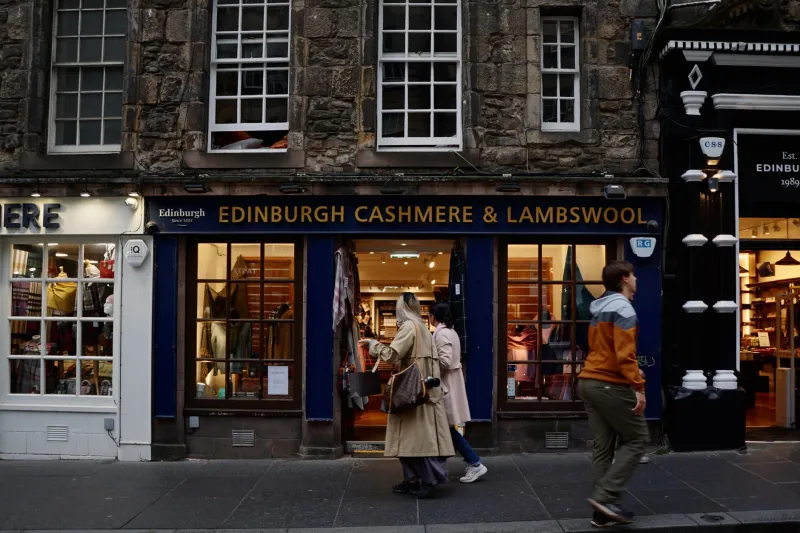
In 2026, that rhythm is everywhere on the British high street. Cash-for-gold signs sit between vape shops and charity shops. Pawnbrokers advertise instant loans against watches, jewellery, tools, games consoles. The windows are full of rings and chains and little velvet trays, and the message is always the same: your past can be converted into a very short present. Requiem for a Dream understood this long before the current squeeze made it a national habit. The film is not only about addiction. It is about the everyday economy of borrowing against the future.
What Sara is really watching
Sara Goldfarb’s television is the film’s great object of desire. It is not just a set. It is a window, a promise, a version of herself that might still be possible. The game show, the red dress, the audience, the applause: all of it is a future she can almost touch. And the tragedy is that she mortgages her body to get there. The pills, the diet, the amphetamine spiral — they are all forms of credit. She is paying for a dream with something she cannot get back.
That is the same logic as the pawn ticket, just stretched over a longer period. The pawnbroker says: give me something you love and I will give you enough to survive until Friday. Sara says: give me a version of myself that is worth watching and I will give you my sleep, my appetite, my grip on what is real. Both are trades. Both are made in good faith. Both end with the object on the counter and the person hollowed out.
In Britain in 2026, the high-street pawnbroker is often discussed in the language of practicality. It is cheaper than a payday loan, more discreet than a bank, quicker than a benefits claim. That is true, and it is also the point. The system works because it is practical. It turns sentimental objects into short-term survival. A wedding ring becomes a gas bill. A gold chain becomes a week’s food. A watch becomes the difference between staying warm and not. The transaction is small. The humiliation is quiet. The high street is the stage on which it happens.
The chain, the ring, the television
Requiem for a Dream is full of objects that carry weight. Harry’s mother’s television. The red dress. The stash. The needles. The fridge. The film’s costume language, its set design, its recurring close-ups of things — all of it insists that objects are never just objects. They are memory, status, hope, debt. A gold chain is not a gold chain. It is a gift, a history, a bit of yourself you can hock when things get tight.
That is why the pawnshop scenes matter. They are not dramatic set pieces. They are the film’s economic unconscious. Harry and Tyrone are not just addicts. They are young men with no safety net, trying to turn what they have into what they need. In 2026, that is a recognisable British story. The high street has become a series of small exchanges: cash for gold, phones for cash, consoles for credit. The language is friendly. The windows are bright. The sums are small. The stakes are not.
The quiet desperation of the window
What Requiem for a Dream gets right — and what makes it feel newly relevant in 2026 — is the way it refuses to make pawnshops exotic. There is no sermon. There is no dramatic music. There is just a counter, a ticket, a drawer. The film understands that desperation in Britain is rarely cinematic. It is a queue. It is a form. It is a woman in a coat holding a ring in a tissue. It is a man deciding which of his possessions he can live without for a fortnight.
That is the real horror of the pawnshop high street. Not the crime, not the violence, not the obvious villains. The horror is the ordinary-ness of it. The way a sentimental object becomes a short-term survival strategy. The way the future gets sold off in increments. The way the ticket goes in the drawer and the drawer closes and the shop assistant says “next” and the next person steps forward.
Requiem for a Dream is often described as a film about addiction. It is. But it is also a film about the economy of hope — who gets to borrow against it, who gets to keep it, and who ends up standing at a counter, trying to trade it for a few more days.