The Red Dress and the Ring Light: Requiem for a Dream and Britain’s Talent-Show Bargain
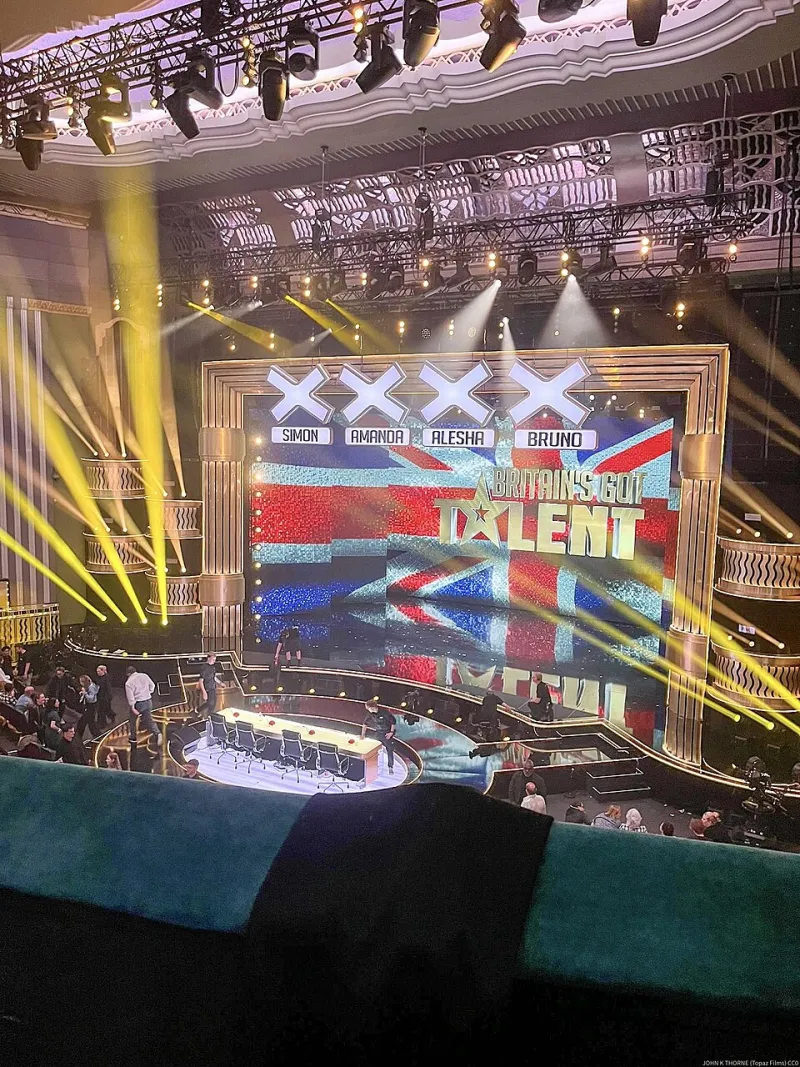
Photo: JOHN K THORNE, CC0, via Wikimedia Commons
In Darren Aronofsky’s Requiem for a Dream, the television is never just on. It is a window, an instruction manual, a rival. Sara Goldfarb sits in her Brooklyn flat and watches a version of herself that could exist if the letter, the dress and the diet all hold. The red dress is the costume of that future. The amphetamines are the engine. The applause — imagined, borrowed, pre-recorded — is the proof that the future has arrived.
More than two decades on, that sequence looks less like a cautionary tale about game shows and more like a pilot for the reality-TV era. In 2026, Britain’s talent-show culture still runs on the same promise: that ordinary life is one audition away from being upgraded. The format has changed, the platforms have multiplied, but the bargain is familiar. Be seen. Be transformed. Be loved for a moment. Then be filed away.
The Letter as a Lifestyle
Sara’s fantasy begins with a summons. A letter, a phone call, a slot on a television show: the details matter less than the shape of the thing. It is an invitation from the outside world to become a different person. The red dress is not vanity. It is administration. She is preparing for a version of herself that the camera might approve of.
Britain’s talent-show machine sells the same paperwork. The audition is a threshold. The golden buzzer is a fairy tale. The sob story is a form of currency. Contestants are asked to arrive with a dream and a backstory, then wait while the panel decides whether the two add up to a television moment. The show does not simply discover talent. It manufactures the conditions under which talent can be recognised, rewarded and, if necessary, mourned.
What Sara wants is not fame in the modern sense. She wants to be expected somewhere. She wants a reason to get dressed. The game show in Requiem is a fantasy of relevance, and that is exactly what the talent-show industry is so good at selling. Not stardom, necessarily. A slot. A light. A reason to be in the room.
The Audience Is Cast Too
The easy reading of Requiem is that Sara is a victim of television. But the film is more uncomfortable than that. It shows a woman rehearsing in front of an audience that does not exist yet. By the time the fantasy arrives, she has already built the room. The applause is not a surprise. It is a confirmation.
That is where Britain’s 2026 talent-show habit gets interesting. We do not just watch. We queue for tickets to be the reaction shot. We vote in the app. We share the clip of the public undoing before the credits have finished. The audience is not a passive witness to the machine; it is part of the machine’s nervous system. The show needs our hunger as much as it needs the contestant’s hope.
This is not a scold. There is genuine pleasure in watching someone get a second chance, and genuine relief in seeing a room full of strangers decide to be kind. But the format knows how to convert that pleasure into product. The tears are timed. The pause before the verdict is an edit. The applause is a cue, not a response. We are not outside the frame. We are the room Sara imagines when she puts on the red dress.
Rescue and the Ring Light
The talent-show bargain has always been two-sided. The contestant gets exposure; the broadcaster gets a story. In 2026, the story is often about rescue. A carer who sings. A school cook with a hidden voice. A person who has been told no for years and is now, finally, told yes by a panel and a crowd. The show offers reinvention in ninety minutes, with an ad break.
Requiem refuses that comfort. Sara’s transformation is chemical, not televisual. Her red dress does not lead to a golden buzzer; it leads to a hospital corridor. The film understands that the promise of rescue can be a trap, especially when the rescue is being staged for other people’s entertainment. The audience gets the catharsis. Sara gets the side effects.
Britain’s talent shows are not Requiem. They are not a descent into addiction, and it would be cheap to pretend otherwise. But they share a grammar: the close-up, the swelling music, the wait for the verdict, the cut to the family in the wings. The grammar works because it borrows from real hope. The danger is not that the hope is fake. The danger is that it is real, and still gets used as content.
The Daytime Slot
Sara’s dream has a specific afterlife. She does not imagine red carpets. She imagines being on television, in the afternoon, in front of people who have known her only as a face in their living rooms. The daytime slot is the holy grail of the ordinary person’s fantasy: not global fame, but national familiarity. A version of being known that does not require being understood.
In 2026, that slot has fragmented into podcasts, TikTok clips, morning sofas and sponsored posts. The dream is smaller and faster, but the shape is the same. Be plucked from obscurity. Be processed into a narrative. Be returned to the audience with a new label. The talent-show machine is one of the few remaining places where that process still happens in public, with a studio audience and a theme tune.
The cost is not always dramatic. Most contestants go home with a story and a few thousand followers. But the format has a habit of treating the public undoing as the point. The audition that goes wrong is more shareable than the one that goes right. The panel’s pity is a close-up. The audience’s applause is the sound of the machine working.
Applause as Anaesthetic
Requiem for a Dream does not hate its characters. That is what makes it unbearable. Sara is not a fool. She is a person with a small flat, a dead husband, a son she cannot reach and a television that keeps promising a different life. The red dress is her way of saying yes to that promise. The amphetamines are her way of making the yes happen faster.
Britain’s 2026 talent-show hunger is not so different. It is a hunger to be rescued by a system that is already looking at us as a story. The audience is complicit because the audience is the story’s first consumer and its final judge. We applaud the reinvention and the collapse. We buy the single. We watch the clip. We move on.
The uncomfortable lesson of Requiem is not that television is evil. It is that the room we imagine can become a room we cannot leave. Sara builds an audience in her head, and then the audience builds a life around her that she cannot control. The talent-show bargain offers the same trade in a brighter package. A red dress. A ring light. A chance to be seen. The applause is not the end of the story. It is the sound of the contract being signed.