The Seminar Room Reel: Requiem for a Dream and the Ethics of Teaching the Unbearable
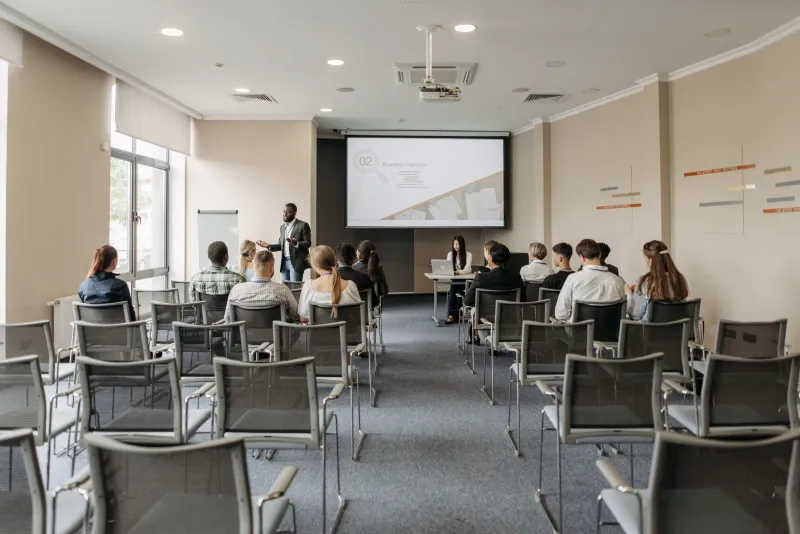
There is a particular sound in a UK seminar room when the lights go down and Clint Mansell’s strings begin their slow, tightening coil: the sound of twenty or so people realising they are not watching this at home, on a laptop, with a phone in reach and the option to pause. Requiem for a Dream has been a fixture on film studies syllabi for years, from A-level coursework to undergraduate modules on cult cinema, adaptation and the aesthetics of excess. But in 2026, its classroom reputation is as much about endurance as analysis. It is the film that comes with a warning, a reputation and, often, a quiet test of whether you can sit with it.
A Syllabus With a Warning Label
The film’s formal qualities make it hard to ignore academically. Darren Aronofsky’s split-screen montage, the hip-hop editing rhythms of the early scenes, the repeated bodily motifs and the escalating sound design all invite close reading. Lecturers can teach it alongside addiction narratives, urban alienation, post-industrial American cinema or the shift from 1990s independent film to the glossy dark drama of the 2000s. It is, in that sense, a useful text: visually legible, emotionally forceful and packed with moments that reward frame-by-frame attention.
It is also, plainly, a hard watch. The BBFC’s 18 certificate is not incidental. The film depicts addiction, withdrawal, sexual exploitation, psychosis and institutional neglect with a relentlessness that has made it a staple of ‘tough watch’ lists and student folklore. In seminars, that reputation arrives before the film does. Students often know the fridge, the arm, the final foetal curl, even if they have not seen the whole thing. The question for teachers is how to manage that pre-existing aura without turning the screening into a dare.
Conversations with lecturers in UK film and media departments suggest a range of approaches. Some schedule Requiem late in a module, after establishing protocols for content notes and debriefing. Others pair it with lighter or more distanced material, using excerpts rather than a full screening. A few still show it in one go, arguing that the film’s cumulative pressure is the point. What unites them is a wariness of surprise. The days of springing the film on a seminar group without warning are, in most institutions, over.
The Rite-of-Passage Problem
For former students, Requiem often occupies a strange place in memory: less a film you enjoyed than one you survived. Several describe watching it in a lecture theatre and then walking out into ordinary daylight feeling briefly alienated from the campus around them. Others remember the discussions afterwards more vividly than the screening itself – the scramble to talk, the dark humour, the sense that the group had been through something together.
That shared experience can be pedagogically valuable. It can create a room. But it can also harden into a rite of passage, a piece of dark-cinema bravado that makes those who opt out feel like the odd ones. In 2026, with greater awareness of student mental health and more formalised content-note policies, the ethical line is clearer than it used to be. A trigger warning is not a spoiler; it is a map of the terrain. The difficulty is that no warning can fully prepare someone for the film’s final act, and no lecturer can guarantee how a room will react.
The ‘tough watch’ list has become its own genre online, and Requiem is a perennial entry. That reputation can be useful – it signals honesty – but it can also flatten the film into a test of stamina. In the classroom, the better question is not ‘can you take it?’ but ‘what is this film asking you to notice, and at what cost?’ The endurance test is not the point. The point is what survives the test.
What the Seminar Room Can Hold
Teaching dark cinema responsibly does not mean sanding off its edges. It means being clear about the frame. A lecture theatre is not a living room, and that changes the stakes. Students cannot always leave without drawing attention; they may be sharing a flat with no quiet space afterwards; they may be carrying their own histories into the room. Good practice in 2026 tends to involve content notes in advance, permission to step out, and a structured discussion that does not require personal disclosure. It also involves recognising that some students will not watch the film at all, and that this should not be treated as a failure of rigour.
Requiem remains teachable precisely because it is difficult. Its craft is inseparable from its cruelty. But the classroom should not confuse discomfort with insight. The film’s most valuable lesson may be about the limits of representation: how far a director can push an audience, and what happens when that push becomes the whole point. In a seminar, that question can be opened up rather than endured in silence. The lights come up, the credits roll, and the real work begins – not proving you made it through, but working out what the film did while you were in the dark.