The Christmas That Never Comes: Requiem for a Dream and the Anti-Festive Tradition
Christmas films tend to arrive with their arms full. There is usually a lesson, a reconciliation, a snow-dusted hug and a soundtrack that tells you exactly when to feel warm. Requiem for a Dream arrives with nothing. It is a film about wanting, and wanting is the one thing the festive season cannot stop talking about. That makes Darren Aronofsky's 2000 adaptation of Hubert Selby Jr.'s novel a strange but fitting addition to the British anti-Christmas shelf: not a film to put on after the Queen's speech, but one to put on when the speech, the adverts and the cracker jokes have started to feel like a sales pitch.
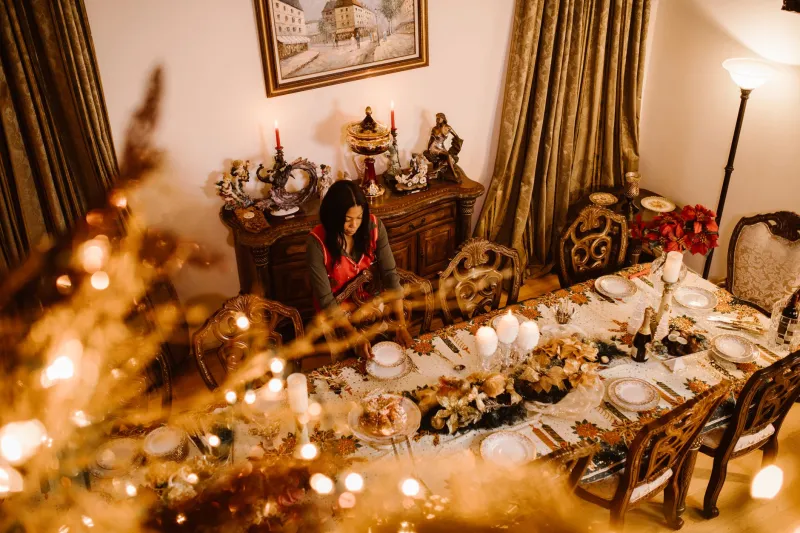
In 2026, the Christmas schedule is already doing its familiar work. Supermarkets are selling togetherness by the trolley-load. Streaming services have arranged their festive rows like pick-and-mix counters. Even the gloomier corners of British television will eventually reach for a repeat of something cosy. Requiem for a Dream cuts against all of it because it understands that Christmas is often a promise that does not arrive. The table is laid, the lights are on, and the people around it are still waiting for something they cannot name.
Sara's Television Dream
Ellen Burstyn's Sara Goldfarb is the film's most devastating Christmas figure, even though the film never wraps her in tinsel. She lives alone with a television that has become a portal. When she gets the call about appearing on a game show, her world contracts to a single point of hope: the red dress, the audience, the version of herself who might finally be seen. It is a fantasy of being chosen, which is not far from what Christmas advertising sells every year. The festive adverts promise that the right purchase will bring the family back to the table. Sara's diet pills promise that the right body will bring her back into the world.
What makes Sara's story so cruel is how recognisable the setup is. She is not chasing fame in any glamorous sense. She is chasing a room full of people who are pleased she exists. For many viewers, that is the quiet ache underneath Christmas: the fear of being left out, of being a burden, of watching everyone else's celebration through the glass. Aronofsky shoots her apartment like a waiting room. The television flickers, the phone rings, and the walls seem to close in. By the time the fantasy turns delusional, the film has already shown us that the dream was never really about the game show. It was about escaping loneliness.
Harry and Marion's Makeshift Home
Harry and Marion's relationship is another kind of Christmas story, though it looks more like a squat than a stable. They talk about opening a shop. They imagine a future with a clean flat, a bit of money and a life that fits together. In the meantime, they make a home out of stolen moments and borrowed comfort. There is tenderness between them, but it is always undercut by the next fix. Their version of domesticity is a promise they keep making to each other without ever being able to keep it.
That is where Requiem for a Dream becomes genuinely anti-festive. Christmas is supposed to be the season of the family unit, however frayed. Harry and Marion are a family unit of two, and the film lets us see how much they want the ordinary things: a place of their own, a future, a reason to stop. But the film refuses to let them have it. Their dream is not destroyed by a pantomime villain. It is eroded by economics, addiction and the slow realisation that the life they are imagining has no room for them. In Britain, where the housing crisis and the cost of living have made 'home' a loaded word, that erosion feels less like a cautionary tale and more like a pressure gauge.
No Comfort, No Comedown
Most Christmas films are built around a comedown. The arguments happen, the turkey burns, someone says the wrong thing, and then the music swells and everyone learns something. Requiem for a Dream has no such release valve. The film's final movement is not a resolution but a collapse. Sara is left in a state of institutionalised oblivion. Harry loses an arm. Marion's dignity is traded away. The film does not offer a warm hug or a lesson about the true meaning of Christmas. It offers a mirror, and the mirror is not especially flattering.
That refusal is why it belongs in the alternative Christmas viewing tradition. Britain has a long history of bleak festive telly: the Christmas special that goes wrong, the soap opera that schedules a death for ratings, the kitchen-sink drama that treats the season as a backdrop for disappointment. Requiem for a Dream is not British, but it fits the mood. It has the same grey palette as a council-estate winter, the same suspicion of easy sentiment, the same sense that the people on screen are not being looked after by anyone. It sits comfortably beside the tradition of watching something grim while the fairy lights blink in the corner.
A Different Kind of Festive Film
None of this means Requiem for a Dream is a Christmas film in the conventional sense. It is not. But it is a film about the things Christmas often hides: loneliness, family pressure, the fantasy of consumer rescue, the gap between the life we are sold and the life we can afford. In 2026, with festive adverts promising that the right gift will solve everything, there is something honest about a film that says otherwise. It does not want to cheer you up. It wants to make you look.
So if the season starts to feel like a table with no room at it, Requiem for a Dream is there. Not as a comfort, but as a counterweight. It is the anti-Christmas film for anyone who has ever watched the adverts and felt the quiet sting of being outside the window. It does not offer good tidings. It offers the truth, which is sometimes the only gift worth unwrapping.