The Jab and the Jingle: Sara Goldfarb in Britain's 2026 Weight-Loss Rush
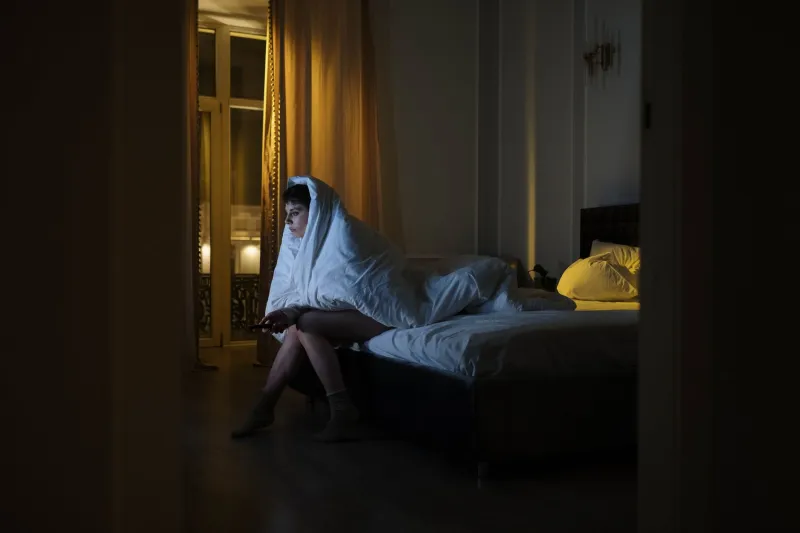
A kitchen table with a television on it
Sara Goldfarb does not begin Requiem for a Dream as a monster or a moral. She begins as a widow in an apartment with a television that is always on. The game show is bright, the host is smooth, and the audience laughs on cue. Sara wants to be on that screen. She wants the red dress. She wants, more than anything, to be seen. In Darren Aronofsky's 2000 film, based on Hubert Selby Jr's 1978 novel, her route to that fantasy runs through a doctor's prescription and a bottle of amphetamines. The pills are meant to make her fit the dress. They end up making her fit the horror.
In 2026, Britain has its own version of that kitchen-table dream, except the dream arrives in a branded box and the prescription is often just a form on a phone. Weight-loss injections have moved from clinical margins to the centre of the national conversation. Ozempic, Wegovy, Mounjaro: the names get used like shorthand for a whole era. Private clinics advertise quick starts. Online pharmacies ask for a BMI and a payment card. NHS waiting lists for specialist weight management services remain a test of patience, and the gap between who can pay and who must wait is its own kind of drama. The language is different from Sara's, but the grammar is familiar. A body is told it is a problem. A product is offered as the solution. A screen watches to see if the transformation is working.
From prescription pad to checkout basket
It would be lazy to call Sara Goldfarb a 2026 injection patient in period costume. She is not. Her pills are amphetamines, not GLP-1 agonists. Her story is about addiction, isolation and a country that treats hunger as a character flaw. But Requiem's domestic body horror comes from something more portable than pharmacology: the way ordinary objects become instruments of surveillance. The bathroom scale. The mirror. The diet book. The television. The kitchen clock. In Sara's world, these are not props. They are judges.
Britain's 2026 weight-loss boom has its own set of judges, and most of them glow. There is the ring light before a before-and-after photo. There is the filter that smooths a jawline and tightens a waist. There is the app that logs a dose, the group chat that compares side effects, the influencer who says 'journey' when they mean 'advertisement'. There is the private clinic on a high street that looks like a spa and the online pharmacy that looks like a checkout. The cosmetic pharmacology panic is not only about needles. It is about the way a personal decision becomes public content, and the way a body becomes a dashboard.
Requiem understood the visual language of that dashboard before the dashboard existed. Aronofsky and his editor, Jay Rabinowitz, cut Sara's routines into fragments: pills, pupils, coffee, TV static, the same small rooms. The film does not need a monster. It has repetition. It has close-ups. It has the fluorescent buzz of a life being measured in milligrams. In 2026, the same logic appears in a hundred filtered posts: the same angle, the same pose, the same promise that the next month will be the one where the real self arrives.
The bathroom scale as haunted object
The best body horror does not show you a body being destroyed. It shows you the objects around the body becoming hostile. In Requiem, Sara's apartment is full of them. The fridge hums. The television nags. The door chain rattles. The scale sits there like a witness. Her decline is not a single catastrophic event; it is a series of small domestic betrayals. The pills make her jaw clench. The diet makes her dizzy. The dream makes her cruel to the people who love her. By the end, the horror is not that she has changed. It is that the room has stayed exactly the same.
Britain's 2026 injection boom has produced its own haunted objects. The pen with the dial. The sharps bin. The prescription bag. The bathroom mirror with a phone propped against it. The kitchen scale that weighs portions because the bathroom scale weighs the self. For some people, these objects are tools of genuine medical care. For others, they are the props of a private panic. The film's warning is not 'do not take medication'. It is 'do not let a product write the story of your worth'. That warning lands differently when the product has a rewards programme.
A filter is a funhouse mirror
Sara's television is a filter. It takes her ordinary life and replaces it with a version that is brighter, thinner, louder and loved. The game show does not need to be real for Sara to reorganise her days around it. In 2026, the filter is literal. Social feeds are funhouse mirrors that flatter and distort at the same time. They show us bodies that have been edited, lit and selected, and then they invite us to compare our unedited mornings to someone else's best frame.
The result is a new kind of domestic body horror: not a monster in the wardrobe, but a notification in the pocket. A private clinic sends a reminder. A pharmacy offers a discount. A stranger comments on a collarbone. The panic is not just about weight. It is about agency. Who gets to decide when a body is finished? Who profits from the answer being 'never'? Requiem's Sara is surrounded by people who think they know what is best for her: her son, her neighbours, the doctor, the TV. In 2026, the chorus is bigger and it is monetised.
What the film gets right, and what it does not
Requiem for a Dream is not a documentary about weight-loss injections, and it should not be used as one. It is a stylised tragedy about addiction and American fantasy, and its treatment of Sara is both empathetic and merciless. The film does not blame her for wanting the red dress. It blames the machine that sold her the idea that she needed it. That distinction matters in 2026, when conversations about Ozempic and its siblings can slide into stigma. People who use weight-loss medication are not failed characters in a cautionary tale. They are people navigating a commercial system that has learned to speak the language of health while selling the language of shame.
Still, the rhyme is there. Sara's amphetamines were prescribed, legal and socially sanctioned in their moment. The injections of 2026 are prescribed, legal and increasingly normalised, even as they are also debated, rationed and advertised. The panic around them is not really about the needle. It is about the old fear that a body might be changed too easily, or not easily enough, or in the wrong way. Requiem's genius is that it makes that fear intimate. It puts it in a kitchen. It gives it a television. It lets it hum.
The golden hour in Requiem is not a time of day. It is the glow of the screen, the glow of the bottle, the glow of a future that is always just out of reach. In Britain's 2026 weight-loss rush, that glow is everywhere: in clinic windows, in phone screens, in the soft-focus light of a before-and-after. The jab does not need a monster. It has a mirror, a scale and a checkout basket. Sara Goldfarb would recognise the room.