Strings That Refuse to Release: Clint Mansell's Requiem Score, Cue by Cue
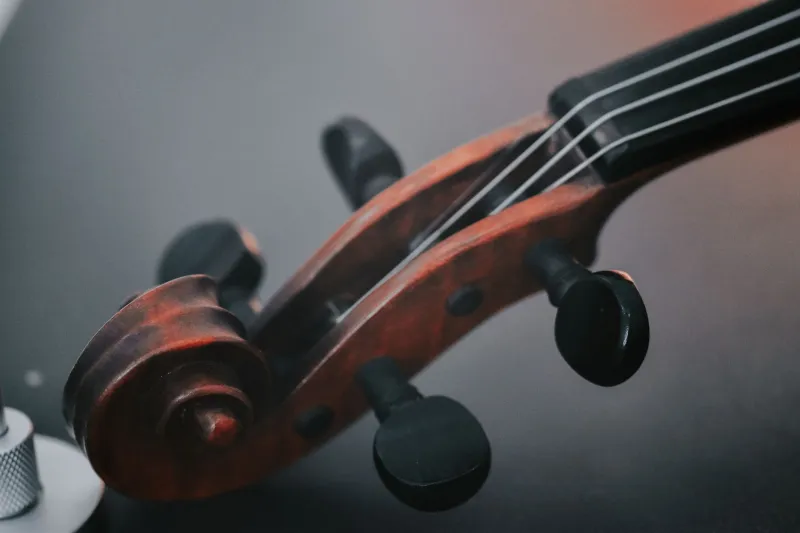
Clint Mansell's score for Requiem for a Dream does not sit behind the images. It leans on them. Performed by Kronos Quartet, with Mansell's electronics threading through the strings, the music behaves less like accompaniment and more like a second nervous system. Darren Aronofsky's film is structured around seasons, and the soundtrack follows that arc: summer heat, autumnal slippage, winter collapse, a spring that never quite arrives. What makes the score so durable is how little it needs to announce itself. A repeated figure, a scrape of bow on string, a low electronic pulse — that is often enough to make a scene feel like a trap closing.
Summer: The Pulse Begins
The score opens with 'Summer Overture', and it is already lying to us. The strings have a bright, upward pull, but the repetition is too rigid, too mechanical. Kronos Quartet play it with a tense, clipped attack; the motif does not breathe so much as tick. This is the sound of possibility on a timer. 'Party' fractures that energy into short, jittery gestures, while 'Coney Island Dreaming' drifts in with a queasy nostalgia. Mansell understands that dreams in this film are not soft things. They are consumer products with sharp edges.
'Cleaning Apartment' is one of the clearest early statements of the score's method. The strings saw away in small, obsessive loops; electronics hum underneath like a fridge in an empty flat. It is domestic music, but poisoned. By the time 'Ghosts of Things to Come' arrives, the harmonic language has started to curdle. The title is a giveaway, but the music earns it: a motif that felt like forward motion in the overture now sounds like a warning.
Fall: Motifs Start to Rot
The Fall movement is where the score's recurring ideas begin to sour. Mansell does not introduce a completely new vocabulary; he distorts the one we have already learned. Phrases are shortened, repeated, stripped of resolution. 'Dr. Pill' is a particularly good example of how the score does psychological damage with minimal means. It is not a horror cue. It is a routine cue — the sound of a habit becoming a schedule. The electronics are dry and clinical, while the quartet's lines feel pinched and bloodless.
This is also where the score's relationship with the film's editing becomes most obvious. Aronofsky's rapid-cut montages need music that can withstand repetition without becoming boring. Mansell's answer is variation through texture: a motif might return on muted strings, then sul ponticello, then buried under a low synth throb. The effect is less like a theme and more like a compulsion. You notice it the way you notice a neighbour's alarm clock through a wall.
Winter: The Bottom Drops Out
By Winter, the score has stopped pretending. The string writing becomes heavier, more abrasive; the electronic elements move from background hum to something closer to structural damage. Cues such as 'Winter Overture' and the material around the film's hospital and prison sequences trade the earlier nervous energy for a cold, suspended dread. There are moments where the music seems to stall entirely, as if the characters have run out of narrative road.
This is where 'Lux Aeterna' lands with such force. On paper, it is a simple enough idea: a rising string figure, repeated and layered until it feels less like music than an inevitability. In the film, it becomes the sound of ambition curdling into punishment. The Kronos Quartet's performance is crucial. They do not play it as a grand statement; they play it as a mechanism. The repetition is the point. Every return of the figure feels like another step towards the worst possible version of the characters' dreams.
Why It Still Haunts UK Screens
You have heard 'Lux Aeterna' even if you have never seen Requiem for a Dream. It became a trailer staple in the 2000s and has never really gone away — a shorthand for mounting dread in everything from fantasy epics to sports montages. In the UK, it is the kind of cue that turns up in BBC drama trailers, documentary adverts and any edit that needs to signal that things are getting serious. That ubiquity could have dulled it. Instead, it has become a kind of cultural furniture: recognisable, slightly ominous, and weirdly useful.
The score's bigger legacy is compositional. Mansell and Kronos Quartet showed that a psychological film did not need a traditional orchestral sweep to feel enormous. A string quartet, a few electronic pulses and a refusal to resolve could do the job. That template is everywhere now, from low-budget British thrillers to prestige TV. But few scores use repetition as ruthlessly as this one. Requiem for a Dream does not just use music to tell you how the characters feel. It uses music to make you feel the mechanism they are caught in — the loop, the habit, the promise that keeps renewing itself just before it breaks.