The Late Show Doesn’t Let You Leave: Requiem for a Dream and Britain’s Midnight Screening Habit
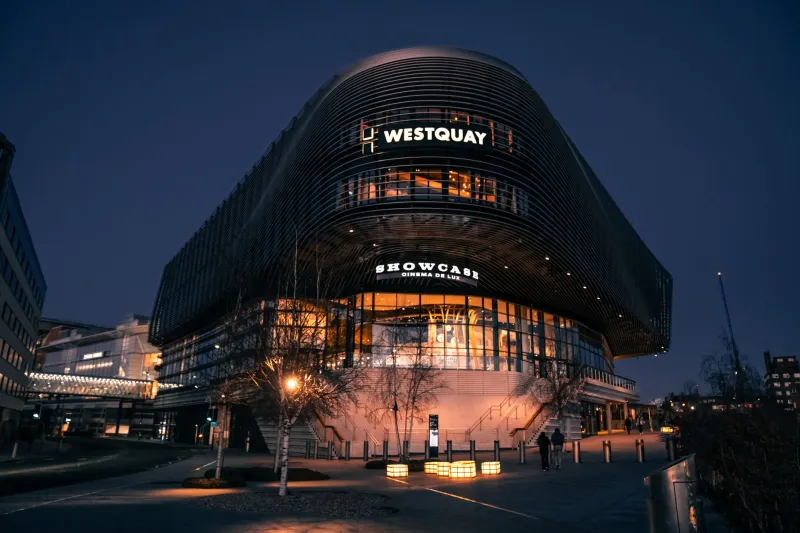
The queue at 11:40pm
There is a particular kind of quiet outside a UK arthouse cinema just before a midnight screening. It is not the hush of anticipation you get before a blockbuster premiere. It is closer to the mood on a platform before the last train: tired, slightly giddy, and faintly aware that you have chosen this. In 2026, that queue keeps forming. From the Prince Charles Cinema in London to the Glasgow Film Theatre, from Tyneside Cinema to the Hyde Park Picture House in Leeds, late-night repertory programming has become a fixture rather than a novelty. And somewhere near the top of the endurance pile sits Darren Aronofsky’s Requiem for a Dream.
The film is twenty-six years old. It has been memed, parodied, studied and soundtracked to death. And yet it still sells tickets at an hour when most of the country is asleep. That is worth taking seriously — not because it is surprising that people like dark films, but because the midnight screening turns darkness into a shared, time-bound event. You cannot pause it. You cannot scroll past the hard bits. You have bought a seat and you are going to sit in it.
A film that behaves like a countdown
Requiem for a Dream is not a pleasant watch, and it has never pretended otherwise. Its four central characters — Harry, Marion, Tyrone and Sara — are each pulled apart by appetite, and Aronofsky structures the film like a countdown rather than a conventional narrative. The seasons tick past. The split-screen images crowd in. Clint Mansell’s score, built around the Kronos Quartet’s relentless strings, does not so much accompany the descent as dramatise it. By the final act, the film is less a story you are following than a pressure you are under.
That pressure is precisely what makes it a repertory title rather than a streaming default. At home, Requiem is a film you can abandon. You can take a phone break during the fridge scene, or decide that tonight is not the night. In a cinema, the film’s formal grip is reinforced by the room. The exit signs glow. The person beside you shifts in their seat. The couple behind you stop whispering. The shared discomfort becomes part of the texture of the screening. It is not that the film is better with an audience; it is that the audience makes the film’s duration unavoidable.
The late start matters too. A midnight screening is not simply a normal screening moved later. Fatigue lowers your defences. The usual critical distance — the part of your brain that watches and assesses — gets worn down. By 1am, you are less likely to be impressed by a clever cut and more likely to be affected by a sound. That is the slot doing some of the work.
The cinema as a holding pen
UK venues have become smart about framing this kind of programming. The midnight slot is often sold as a ritual rather than a product: an introduction from a programmer, a themed bar, a short before the main feature, a post-film discussion in the pub next door. The screening is a container for an experience that begins before the lights go down and ends long after the credits. In a market where streaming offers infinite choice and zero friction, the cinema’s advantage is not picture quality. It is the imposition of a beginning, a middle and an end.
That framing is especially useful for a film like Requiem. No one wants to be told they will enjoy it. The pitch is closer to a challenge: this is going to be intense, and you are going to be in a room with other people while it happens. The collective element is not about cheering or irony. It is about the low-level solidarity of a difficult experience. When the credits roll, nobody claps. There is a pause, a collective exhale, and then the slow business of gathering coats and phones. The room has done its job.
There is also something very British about the way these nights are marketed. They lean on understatement rather than hype. A late-night Requiem screening is not sold as a dare; it is sold as a fixture for people who already know what they are getting into. The audience is self-selecting. It is made up of film buffs, students, night-shift workers, people who saw the film too young and want to see it properly, and people who have seen it ten times and still cannot quite explain why they are back. The midnight slot gives them a reason to be in the same room.
The streaming problem
It would be easy to frame this as a simple victory of cinema over streaming, but the reality is more interesting. The rise of late-night repertory programming in 2026 is partly a response to streaming fatigue. When every film is available at all times, the act of choosing becomes its own low-grade stress. A midnight screening removes the choice. It says: here is the film, here is the time, here is the room. That is a relief. It is also a form of curation, and curation is what UK audiences are increasingly willing to pay for.
Requiem benefits from that shift because it is the opposite of background viewing. It demands attention and then punishes it. The film’s sound design — the hum, the repetitions, the way the score refuses to resolve — is designed for a cinema’s speaker system. The split-screen editing, which once looked like a music-video affectation, now reads as a formal representation of fractured attention. On a laptop, it is a style. On a big screen at 1am, it is a mood you have to sit inside.
The walk home
The strangest part of a midnight Requiem screening is what happens afterwards. The film does not end when the credits roll. It follows you out onto the street. The night bus is quieter than usual. The kebab shop is too bright. The walk from the cinema to the station becomes a strange little comedown, a gap between the film’s intensity and the ordinary world. That gap is the real product. It is what you cannot get from a streaming queue, no matter how good your television is.
In 2026, UK film buffs are not short of options. They can watch anything, anywhere, at any time. And yet they keep choosing to sit in a dark room at midnight and be made to feel awful by a film from 2000. That is not masochism. It is an appetite for shared discomfort, for duration, for the kind of experience that leaves a mark because you cannot skip it. The late show does not let you leave. That is the point.